
Denne artikel er oversat fra dansk med AI
Takeaways from 15 inspiring conversations with female leaders
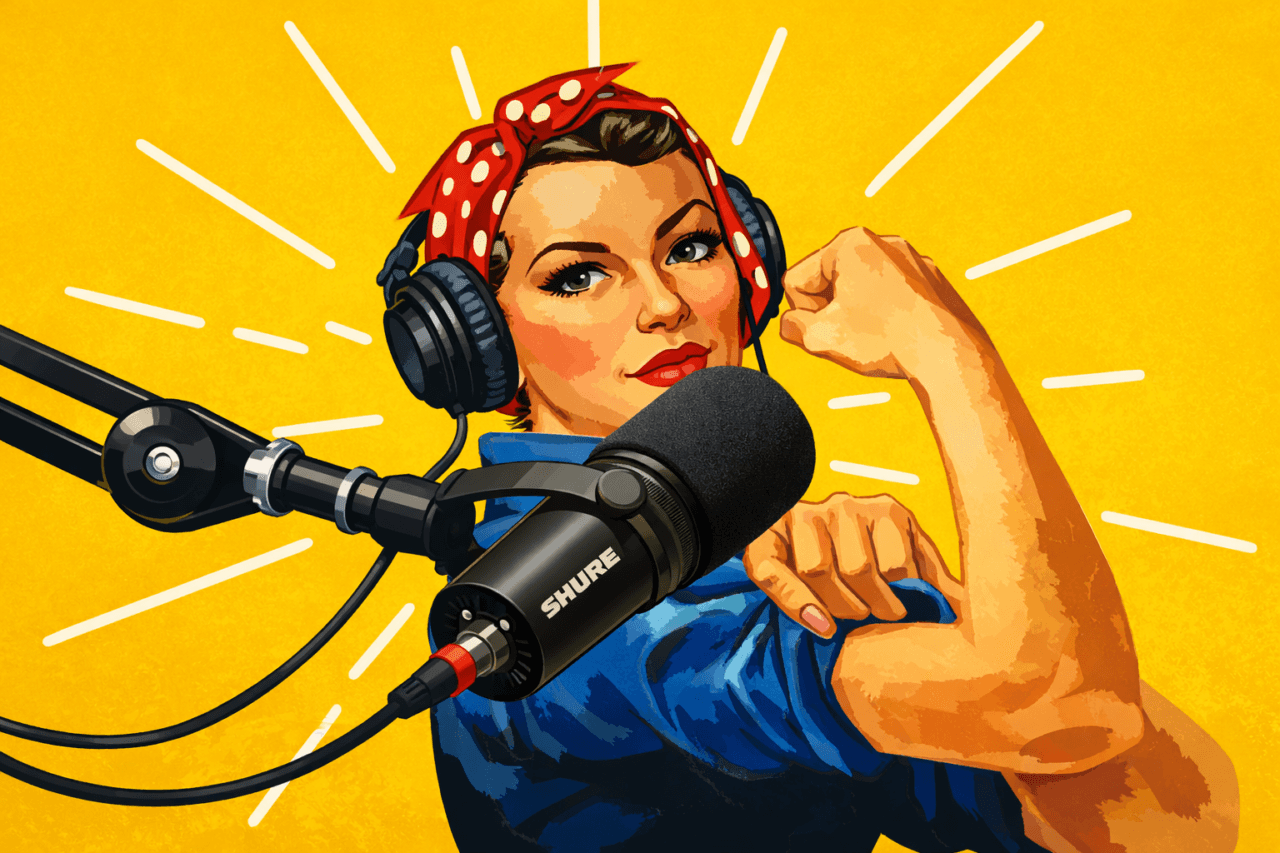
On the occasion of International Women’s Day, I looked back at the 15 conversations I’ve had with senior female leaders on my podcast, Leadership in Motion, and it turned out to be a truly enriching experience.
When you are in the middle of a single conversation, it’s easy to be drawn into the person in front of you. The individual story. The unique experiences. What drives them. The human behind it all. But when you take a step back and look across all 15 conversations, patterns begin to emerge. Patterns that are not only about women in leadership, but about leadership as a whole.
What stands out most to me is not just a story about women who have found their way into executive roles, leadership positions, and boardrooms. It is a story about leaders who are expanding our understanding of what leadership can be. And perhaps also what it should be.
It quickly became about more than gender
When you set out to have a series of conversations with female leaders, you might expect the focus to be on barriers, glass ceilings, under representation, and the struggle to earn a seat at the table. And yes, some of that is part of the conversation. As it should be. We are not there yet. Not even close.
But what struck me the most was something else. It was how often the conversations moved away from the question of simply fitting into existing images of leadership. And toward how we can create new ones.
Many of the women I spoke with did not seem particularly interested in copying an old leadership role. They seemed more focused on shaping a new one. A leadership role with more humanity. More calm. More direction. More courage. More focus on relationships. And a deeper awareness of what helps people and communities succeed.
To me, that is an important shift. Because the conversation is not only about who gets a seat at the table. It is also about how the table is set. Who feels at home there. Which voices are heard. And what kind of leadership is rewarded.
Adversity brings perspective to leadership
Another thing that left a strong impression on me was the depth in many of the conversations. Not depth in terms of theories or complex models. But human depth.
Several of the women spoke from experiences with adversity, loss, doubt, imbalance, overload, or situations that were genuinely painful. These stories were not shared for dramatic effect. They were shared because they had shaped their perspective on leadership.
That made a strong impression on me. Because some of the most credible leadership does not come from people who have never faced adversity. It often comes from people who have been through something difficult and then use it to create better conditions for others.
It can lead to a deeper understanding of grief. Greater awareness of mental strain in organizations. A sharper eye for those who do not fit into the usual boxes. A stronger sense of culture, well-being, and what goes unsaid.
More than once, I found myself thinking that these women were not just strong performers. They had learned to see people. To see dynamics. To see what happens beneath the surface. And those are leadership capabilities we should not underestimate.
Moving beyond the heroic leader
Another clear takeaway was a break with the classic heroic narrative of leadership. You know the one: the leader who has all the answers, leads from the front, shows the way, takes the hits, and carries the full weight of responsibility.
Instead, I heard leaders talk about balancing process and outcomes. Community and results. Building teams rather than elevating individuals. Creating direction without necessarily having all the answers upfront.
This does not mean that clear leadership has become less important. But the complexity of the world calls for more than a single strong individual. It calls for leaders who can bring people together, invite perspectives, listen, translate, and create the right conditions. Leadership where responsibility is shared.
In my view, that is a stronger form of leadership. Stronger than the old one. Because it takes courage not to play the hero. It takes calm. It takes self-awareness. And it takes trust in others’ ability to contribute.
No more false trade-offs
One of the things I appreciated most was how effortlessly many of the women navigated tensions that often trip up leadership debates.
For them, it is not either/or:
- ambition or humanity
- sharpness or empathy
- data or intuition
- results or well-being
- strength or vulnerability
It is both.
For years, leadership has been squeezed into narrow ideals. Either you are tough and decisive, or you are seen as soft. Either you are empathetic and listening, or you are seen as unclear.
That is a poor choice.
It was refreshing to hear leaders who rejected that premise. Leaders who stood firmly in both ambition and humanity. Who wanted to deliver results without burning people out. Who set direction without making themselves bigger than the task.
We need much more of that.
More women in leadership also means more ways of leading
Another recurring theme was the importance of role models.
It matters what we see ourselves in. It matters which images of leadership young women encounter. It matters whether leadership looks like something you want to be part of. And whether it feels possible and meaningful.
If you cannot see yourself in those who lead, why would you choose that path?
This may also explain why some women are not rejecting leadership itself, but certain images of leadership. If leadership is associated with constant availability, toughness, internal politics, and a life without room to be a whole person, it is not surprising that some opt out. And this is not only true for women.
That is why it is not enough to simply say we need more women in leadership. We also need more ways of being a leader. I believe these 15 conversations have contributed to that.
Good leadership is always a bit system-critical
Another takeaway was the attention to context and structures.
When something does not work at work, we often turn it into an individual issue. If someone is struggling, they are not resilient enough. If someone is not succeeding as a leader, they lack impact. If someone falls outside, they are not visible enough.
These conversations pointed in another direction. They encouraged better questions:
- What cultures have we created?
- What norms do we reward?
- Who are our organizations built for?
- Who feels at home in them?
- Who is drained by them?
These questions shift leadership from being purely about individual performance to also being about responsibility for the environment others operate in. That is a significant shift.
Leadership in motion
Of course, we cannot avoid the theme of movement.
I deliberately invite leaders who prioritize movement in their lives, and we always talk about it. Because I am curious about what it says about them—not just as leaders, but as people.
Across the conversations, it becomes clear that movement plays many different roles. For some, it is recovery. For others, mental clarity. For some, discipline. For others, freedom, rhythm, or reflection.
It is not the activity itself—running, cycling, hiking, golf, yoga, mountaineering, or karate—that creates good leadership. But how leaders use movement says something about how they manage energy, gain perspective, handle pressure, and stay connected.
It reminds us that leadership is not just cognitive. It is also about rhythm, balance, presence, and recovery. About being a whole human being—even with significant responsibility.
Leaders in motion are not perfect leaders. But they are often more aware. More present. More resilient. More human.
The work is not done
It would be too easy to write a post that is only uplifting. There is still work to be done. Women are still underrepresented in many industries. Old expectations persist.
There is still a price some women pay for being visible, ambitious, or different—one that men less often pay in the same way.
But these conversations also gave me hope. Not naive hope. Not hope that things will fix themselves. But hope that comes from listening to people who are already showing new ways forward.
Ways where leadership is not just about position, but impact. Where strength is not just toughness, but depth. Where results and humanity are not in conflict. Where ambition and inclusion can coexist.
Where leaders do not become weaker by being more human. Quite the opposite.
Thank you
Finally, I want to say thank you.
Thank you to Maybritt, Rikke, Marlene, Maria, Stina, Ann-Christina, Thea, Louise, Signe, Tina, Mia, Sofie, Nanna, Pernille, and Maria for saying yes.
Thank you for your openness, your time, and your willingness to share experiences, doubts, strength, vulnerability, and reflections on both leadership and life.
Because that is not a given.
I also hope more women will share their perspectives going forward. We need more voices. More experiences. More nuance. More ways of understanding leadership.
And you do not need to have run a marathon, climbed a mountain, or be a CEO to have something valuable to contribute.
Let’s be honest—and a bit provocative:
Many men feel ready to contribute after running a relay race and getting their first leadership role. And many of them do have valuable perspectives.
But the point is this:
There is still a pattern where women feel they need to meet all ten requirements perfectly before they speak up or step forward. While men are more likely to meet a few and think: I can learn the rest.
That may be slightly exaggerated—but only slightly.
And that is exactly why we need to challenge that narrative.
Your perspective is not only relevant when it is fully tested, polished, and perfect.
It is relevant now.