
Denne artikel er oversat fra dansk med AI
How to create leadership meetings that balance operations and organisational development
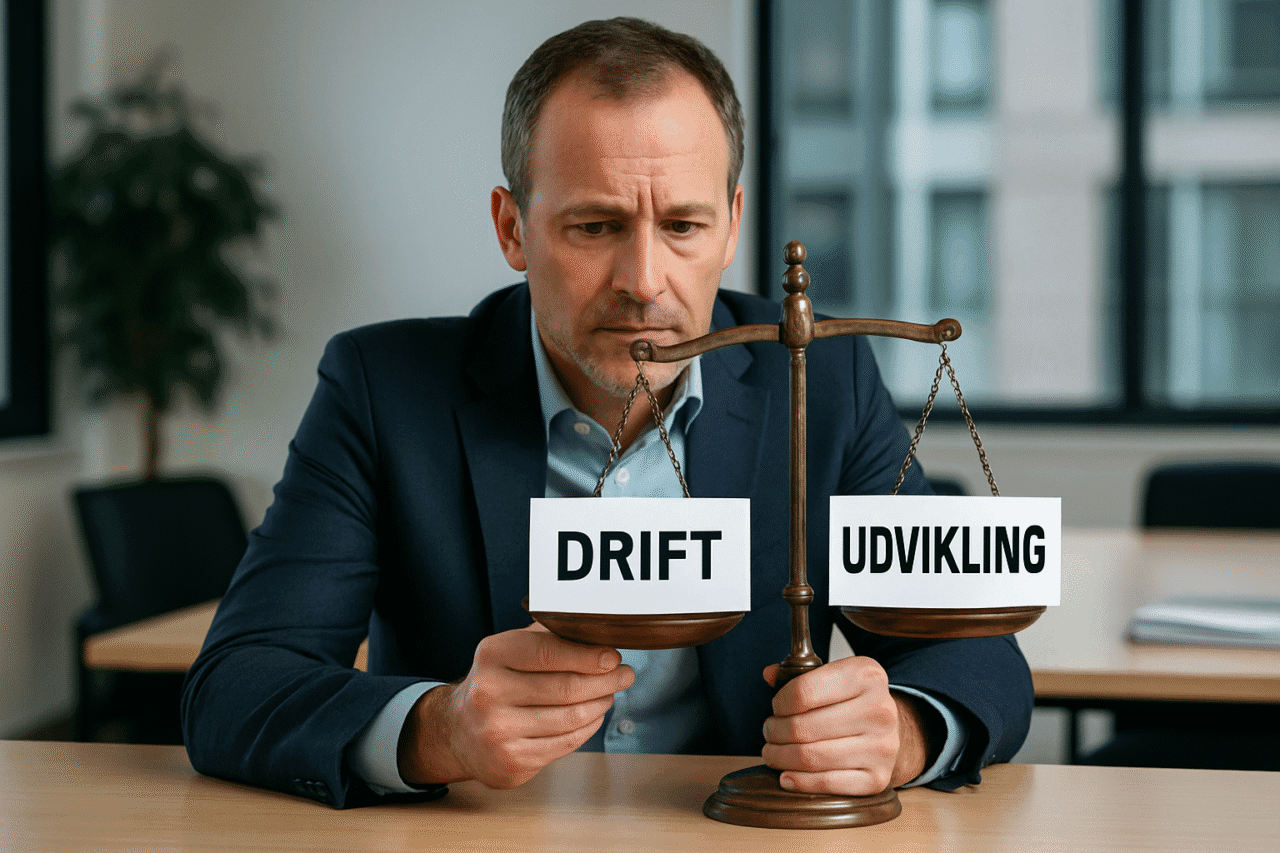
When development always loses to operations
Most leadership teams want to work strategically. They want to develop their department, their culture and the way they work together. But in practice, what happens is usually the same.
You meet. A couple of urgent people issues take up space. A deadline is pressing. A project needs staffing. And suddenly the time is gone.
That is not bad leadership. It is simply the natural consequence of what is close at hand taking up the most space. Or put differently: operations tend to shout louder than development.
In many organisations, and most recently in a leadership team in a larger Danish membership organisation, I have seen the same pattern repeat itself: when operations and development are handled in the same meeting, operations usually win.
So what do you do?
In that organisation, and in many others, the solution has been to draw a sharp distinction between working in the business and working on the business.
It is a small linguistic shift, but it changes behaviour.
- When we work in the business, we are in the engine room. This is where we deal with task management, staffing, people issues, deliveries and all the rest.
- When we work on the business, we step out on deck and look ahead. This is where we talk about culture, strategy, development, direction and the like.
These two modes call for different mindsets. And that is exactly why they should not be squeezed into the same meeting.
The meeting structure matters
This is the structure I have implemented in several places with great effect.
Every Monday, 45 minutes: In the business
Purpose: to create control of operations and the week ahead.
Here we talk about things such as:
- People issues
- Resource planning
- Allocation across tasks and projects
- Budget follow-up and unexpected bumps in the road
The rules are simple:
- We only talk about operations here. Never development.
- When someone enthusiastically says, “I have an idea for how we could change our culture...”, someone will almost always reply, “Isn’t that on the business?” and the topic is parked for later.
Every third week, 3 hours: On the business
Purpose: to develop the department over the medium term.
Here we work with things like:
- Development of competency models
- Cultural initiatives
- Improvements to ways of working and leadership collaboration
- New ways of organising the work
And most importantly:
- We do not talk about operations.
- If something operational comes up and feels urgent, we write it down for the next Monday meeting. That creates calm and makes development a legitimate priority.
Every quarter, one full day: Strategic development and the future
Purpose: to look further ahead and make choices about direction.
This will often be done off site to underline that we are entering a different mode.
Typical themes include:
- Vision and ambitions
- Direction for the leadership team
- What should our department look like in 12 to 24 months?
- Which few major choices do we need to make?
It can feel a little abstract. That is fine. This is where we deliberately lift our gaze.
Why does it work?
Because the structure does three things:
- It protects time for development. Development is not something we squeeze in if there happens to be time left. It has a fixed place.
- It creates focus. There is more calm in the room because everyone knows what kind of meeting they are in.
- It strengthens accountability in the leadership team. When leadership works in a structured way, the organisation tends to do the same.
In reality, it is not really about the structure itself. It is about discipline. But structure can help people stay disciplined long enough for it to become a habit.
It does take some adjustment. In the first few weeks, there is usually a bit of resistance, and the temptation quickly appears: “Couldn’t we just deal with this employee issue first? It will only take a minute.”
If something is genuinely urgent and needs action now, then of course you deal with it. But if it could wait until Thursday’s development meeting, then it could usually also wait until Monday’s operations meeting. It is exactly those little “just this one thing” operational detours that mean development never gets the space it needs.
Once the discipline settles into the body, the structure starts to work.
- The operations meetings become short and concrete.
- The development meetings become more focused, calmer and far more valuable.
- The leadership team gets clearer direction and starts working more in sync.
And perhaps most importantly, you stop talking about development and start actually developing.
Leadership is about balancing time and attention between what is urgent and what is important. Operations are often more urgent than development, but in the longer run development is often more important than operations. When you separate in the business from on the business, you create room for both. The structure is simple. The effect is significant.
In one of the leadership teams I am working with at the moment, we have also started using development OKRs to measure the impact of the initiatives we launch. That too requires discipline and routines to be built. But that is a story for another time.
If you would like to hear more, I am always happy to share experiences over a cup of coffee.
And finally, a thank you to Erik Korsvik Østergaard, who first introduced me to the distinction between working in the business and on the business.