
Denne artikel er oversat fra dansk med AI
You may well be able to do it yourself
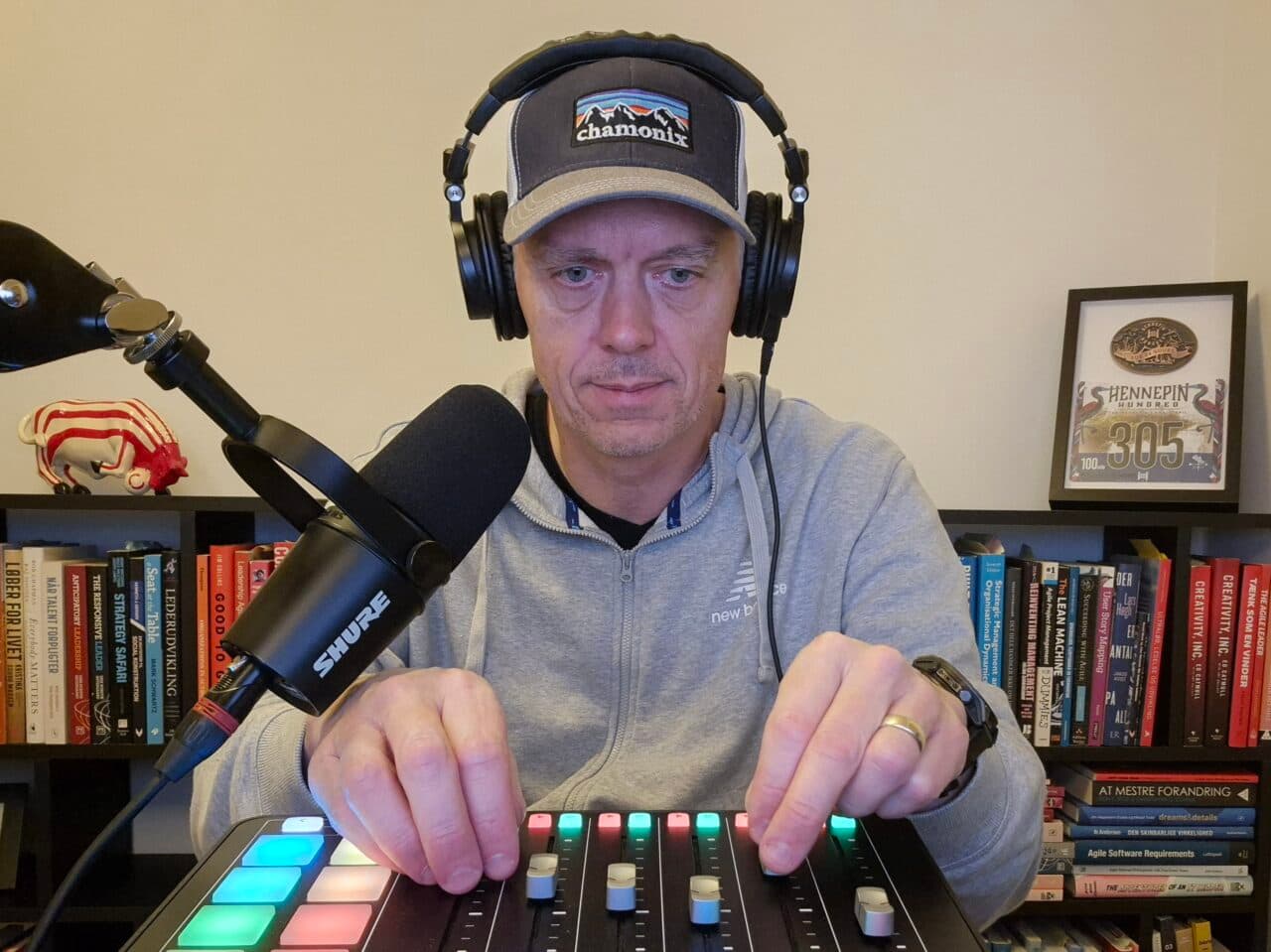
When I started the podcast Ledelse i Bevægelse (Leadership in Motion), I genuinely believed I could handle most of it myself. I had the equipment, I had the motivation, and I had a fairly clear sense of what a good podcast should sound like. Still, I reached out to a couple of professional podcast producers, including Jakob from Ugli Fruit Productions, to ask whether they could help with the production itself.
What I had not anticipated was just how thoroughly and professionally Jakob would approach the task. He asked the questions I had not properly asked myself: What are you actually trying to achieve with the podcast? Who is it for? Who is it not for? And what should listeners be left with? That led us to create a kind of contract with the audience. Not a public document, but a working paper we keep returning to. A promise of direction, recognisability, and quality that serves as an anchor for the whole podcast.
The next big lesson came already with the debut episode featuring Henrik Elsig Andersen. I remember very clearly how nervous I was, even though I was well prepared. I had read Henrik’s book and familiarised myself with his background. I had even signed up to run a couple of stages with him later that summer when he was running around Denmark. After the recording, I felt relieved and fairly convinced we had nailed it. In that slightly euphoric state, I rang Jakob and rather cheekily told him he more or less just needed to add a jingle.
Later, while out for a run of course, I listened to the finished version of the episode. It quickly became clear that Jakob had assessed things rather differently from me. He had cut several parts, moved things around, and tightened the whole conversation. My first reaction was irritation. What was he playing at? But once I had listened to the full episode and calmed down a little, I could hear that he had made it significantly sharper without changing the substance. When I got home, I called him and told him honestly what my first reaction had been. I also told him that from that point on, he had free hands to edit. I had to admit that I was simply too close to the conversations to judge them objectively, and that I needed his outside perspective. That was an important moment in our collaboration.
Since then, Jakob has cut several of my darlings out of different episodes. One example I remember particularly well was the conversation with Anders René Andersen, where we talked about the Tour de France, Jonas Vingegaard, and the importance of the cycling team to the Visma group. We really indulged in the topic, and I loved it. But some of the geekiest passages ended up on the cutting room floor. When I asked why, Jakob said quite plainly that he had had enough cycling nerdiness and that listeners would probably feel the same. Yet another decision I would never have made myself, because I was too invested in the conversation.
Over time, Jakob has become a trusted adviser. Our collaboration has been refined over time, but we still keep a professional distance, and for me that is exactly what makes it so valuable. It is a balance between closeness and objectivity that reminds me a great deal of what I try to achieve myself when I work with leaders and teams.
It is also an incredibly difficult balance to strike. You need to be close enough to understand the customer’s specific context, strategy, market conditions, culture, and history, while still keeping enough distance to see things clearly. When that balance is right, it creates far more value than either of the two extremes, where you either become absorbed into the business or can only contribute theoretical points that do not really meet reality.
I sometimes say to clients, with a smile, that if they want to get rid of me they should just invite me to the Christmas party. Not because I have anything against Christmas parties, but because it captures something important: when you get too close, you lose the objectivity that makes my kind of advice valuable.
In the end, this is not really about how much you can do yourself. It is about how much better things become when you work with someone who brings something different and, just as importantly, sees something different. That is why Jakob will not be joining me for the Christmas party. But I am grateful that he wants to continue as my editor and critical sparring partner in season 4, which will be released in the spring.
And if you are considering starting a podcast and need a skilled and honest sparring partner, I can only give Jakob my warmest recommendation.
And the episodes referred to here, both available in Danish:
Henrik Elsig Andersen:
E1: The Parallels Between Ultrarunning and Leadership
Anders René Andersen:
E20: Team Spirit, the Tour de France, and Trust-Based Leadership